Southwestern Pa. transit plan allocates $1.5 billion for bridge, other infrastructure improvements

Roads and bridges in Southwestern Pennsylvania will see a $300 million boost in funding because of the infrastructure law enacted in 2021.

The extra money is included in a regional plan for $1.5 billion in transportation projects that is set to be approved June 27 by the Southwestern Pennsylvania Commission.

The commission’s Transportation Improvement Program (TIP) covers 2023 through 2026 and includes increases in funding for bridges, highway safety improvements and bike-and-pedestrian infrastructure compared to the previous program.

The SPC is responsible for allocating state and federal funds to local transportation infrastructure projects across 10 Southwestern Pennsylvania counties that surround Pittsburgh.


Among the $300 million increase in funding for roads and bridges under the commission’s jurisdiction, $100 million is earmarked just for bridges.

At a June 1 public meeting, SPC staff explained that the increase in funding for Pittsburgh-area transportation infrastructure is thanks to the $1.2 trillion infrastructure law passed by Congress in 2021.

“With passage of the bipartisan law, the highway and bridge funding is back up to higher levels,” said SPC director of transportation planning Domenic D’Andrea.

Roads and bridges are the biggest winners, but bike-and-pedestrian improvements, while still comparatively small, also saw a big jump and increased five-fold compared to the last TIP.

Funds for public transit also saw a modest jump. D’Andrea said this includes some money for capital improvements, but most is for operations. The majority of public transit funds are funneled to Port Authority of Allegheny County — rebranded Pittsburgh Regional Transit last week — the region’s largest public transit agency.

Read the full article at www.triblive.com


Cranberry Eagle: Osche to raise awareness for ‘Crash Responder Safety Week’

Nearly two months after her son was injured responding to a crash scene, Butler County Commissioner Leslie Osche will raise awareness for “Crash Responder Safety Week” on Tuesday, Nov. 14, at a Southwestern Pennsylvania Commission news conference.

“God uses us all in interesting ways,” she said with a chuckle Monday. “It just so happens that I’m chair of the commission right now, and I’ve had this experience, so to the extent that we can use it to help educate others, we will.”


Osche’s son — state Trooper Josh Osche, of Troop D in Butler — was struck Aug. 24 when he stopped to assist at an accident along the Parkway West in Robinson Township, Allegheny County.

Off-duty, Josh was hit while attempting to place flares around the crash of a Subaru Impreza and a tow truck.

Osche said the tow truck’s driver, Blair Johnson, made the “heroic effort” of dragging her son to safety after he was hit.

“He realized pretty quickly that Josh was in big trouble,” she said. “He said he never expected, when (Josh) landed, that he was going to be alive — based on how far in the air he was launched.”

Since the accident, Osche said her son has been “making great progress” and is up and moving with the assistance of a walker.

“We’re finally able to get in a regular vehicle, and that just happened within the last two weeks,” she said. “He’s actually able to get out a little bit.”

Josh still is unable to put his full weight on his left leg, she said, but she said he’s expected to meet with a surgeon before Thanksgiving Day.

“He’s coming along fine,” she said. “His spirits are fabulous.”

And while he recovers, Osche said, Josh is still participating in state police work as part of its cellular analysis task force.

“He’s studying and researching and producing maps,” she said, “and also still — to the extent that he can — providing assistance to his colleagues in searching and doing analyses to help them find people or reconstruct incidents.”

But he hopes to return to his regular duties soon, Osche said.

“I’m hoping that once we get through the holidays, he’ll be able to go back to the barracks at least,” she said.

Josh speaks very highly of Johnson’s assistance at the crash, according to Osche, and he empathized with the driver who hit him — who “was very shook up.”

“He doesn’t fault anybody; that’s the one thing about him,” she said. “He doesn’t fault anybody, because I think he felt like an accident’s an accident.”

As chairwoman for the Southwestern Pennsylvania Commission, Osche said one of the planning organization’s roles was to “call attention to traffic safety.”

“It’s not just the safety of roadway construction, but in this case, it’s encouraging drivers to be safe and pay attention when there are crashes and crash responders on the highway,” she said.

With “Crash Responder Safety Week,” Osche said Tuesday’s news conference — at the Strip District Terminal in Pittsburgh — will include a memorial for local first responders killed responding to crashes.

“I think this is really just to call attention to the fact that this has a significant impact on people’s lives, and we hope that drivers will be aware of their surroundings, pay attention, watch for those flashing lights, blinker lights, reflective vests,” she said. “Watch for those things, and slow down.”

View the full story at cranberryeagle.com


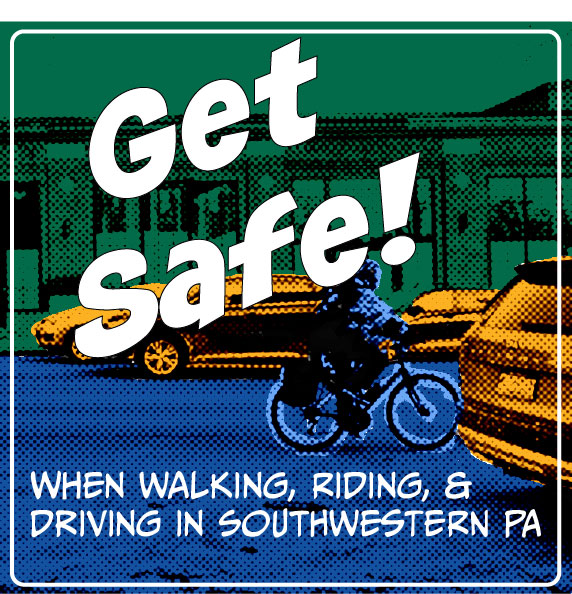
Regional Safety Action Plan

What is a Regional Safety Action Plan?

Regional Safety Action Plan logo.

This is an essential planning document that aids in identifying strategies and project locations to achieve the safety goals, which were established in the region’s Long-Range Transportation Plan (LRTP), “SmartMoves for a Changing Region”, and attain the five federal safety performance measure targets for the region. The RSAP supplements PennDOT’s Strategic Highway Safety Plan (SHSP), by identifying regional safety focus, and location specific improvement areas. With the 2021 development of the federal “Safe Systems” approach, guidelines, grant opportunities, and Proven Safety Countermeasures (PSC), the SPC 2025 RSAP incorporates safety programs, projects, and policies that work towards zero roadway fatalities and serious injuries. A “safe system” harnesses safety tools that could be focused on infrastructure, the transportation industry, human behavior, vulnerable roadway users, and emergency response as relevant.

The goal is zero deaths & serious injuries on our roadways. The plan maps out how we reach this goal.


This is a different roadway safety plan that uses the Safe System Approach. The approach recognizes that humans makes mistakes and that deaths & suspected serious injury crashes are not an acceptable cost of traveling in your communities.

To develop this safety plan, we compiled data, local expertise, and public feedback to find the locations where people are most at risk of fatal or serious injury. We can identify projects, policies, and programs that solve these risks, and we will work together to implement them.

The goal is zero deaths & suspected serious injuries on our roadways. The Safe System Approach is how we reach this goal.


  1. SPC commits to reducing fatal or life-altering injuries on Southwestern Pennsylvania’s transportation system to Zero by 2075.
  2. Increase attentive driving.
  3. Increase sober driving.
  4. Increase calm driving.
  5. Increase use of protective gear.
  6. Increase regional safety culture.
  7. Support both youth and older driver training.
  8. Support all vulnerable road users.
  9. Continue to use Road Safety Audits to employ Proven Safety Countermeasures to the High Injury Network.
  10. Continue to support & strengthen Traffic Incident Management, HSIP projects, and Safe Routes to School.


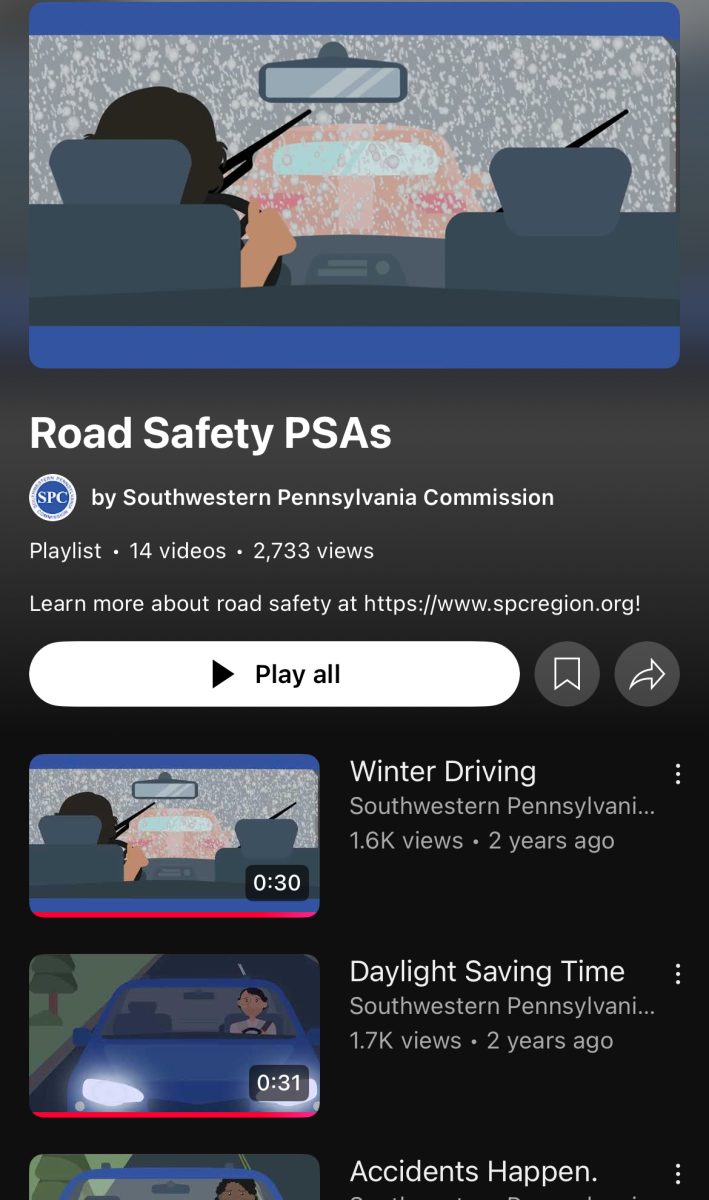
Full Playlist


Welcome to the SPC Regional Vision Zero Crash Dashboard for 2020 – 2024

How to use the dashboard

We have designed the dashboard using the Tableau platform. It shows a lot of data without having to change any of the settings. However, this guide helps you use the dashboard to explore the data in different ways.

Each section in the dashboard is fully interactive, meaning you can click, select, filter, and hover over any items in a map or chart to change the display or show more information.

How to filter

Another filter type in the dashboard is the checklist. In the example here, you can deselect the categories you don’t want to display in the map or chart. The example here is a drop-down checklist that will display when you click on the drop-down arrow pictured at right. Deselect the items you don’t want to display on the map. To add data back to the display, click on the appropriate check boxes. See something we could improve on this page? Give dashboard feedback.


Relevant Publications


We want to hear from you!

Learn more about planning for safety on your roads ‘Get Safe!’ plan by completing our Contact Form. If you have a community event and would like one of our transportation operations & safety planners to attend or speak about our ongoing “Get Safe!” efforts, please send us an email at eschoss@spcregion.org or nhirsch@spcregion.org.

View the SPC events calendar:


The Daily Courier: PennDOT previews 2024 construction projects

PennDOT District 12 officials highlighted nine of the 103 projects anticipated to be in construction status this year in Fayette, Greene, Washington, and Westmoreland counties, representing an investment of $528 million.

Gov. Josh Shapiro’s commitment to delivering safe highways and bridges across the Commonwealth remains a top priority.


These investments support the Shapiro Administration’s vision of a safe and reliable transportation network that connects Pennsylvanians to greater opportunity.

Shapiro’s 2023-24 budget secured $125 million to fully leverage federal Bipartisan Infrastructure Law (BIL) investments and improve Pennsylvania’s roads and bridges.

The investment is made possible by decoupling Pennsylvania State Police funding from the Motor License Fund and is the first year of the governor’s four-year proposal to invest an additional $1.25 billion in the state’s infrastructure.

Statewide in 2023, 684 bridges went out for bid to be repaired, replaced, or preserved and 7,011 roadway miles were improved by department or partner crews.

Just down the block from the historically significant Dunlap Creek (Cast Iron) Bridge in Brownsville, department officials were joined by a Southwestern Pennsylvania Commission representative who discussed funding for regional roads and bridges.

“I am eager to oversee my first construction season in the position of new District 12 Executive,” said Rachel Duda. “My top goal is to look for ways that improve safety and save people’s lives through advances in our transportation system.”

“We are excited for District 12’s upcoming construction season. This work is part of SPC’s four-year, $3.9 billion Transportation Improvement Program (TIP) that we are continuously working on with our local, county, and state partners to prioritize our region’s infrastructure needs,” said SPC Director of Transportation Planning Domenic A. D’Andrea. “These critical infrastructure investments allow our transportation system to be more resilient and enhance our communities.”

Overall highlights in the 2024 construction season for the southwest region – including projects supported and accelerated by the BIL – include, approximately:

  • 93.87 miles of paving.
  • 500 miles of roadway sealcoating and crack sealing.
  • 28 bridges will be preserved, 45 bridges rehabilitated or replaced.
  • 20 slides will be repaired by department forces with an additional six slide locations in a construction status.

“As Assistant District Executive for Construction, I have the privilege of working with many talented professionals to deliver our construction projects in District 12. Soon we’ll break ground for a full rehabilitation of the Dunlap Creek Bridge,” said Bill Beaumariage. “This project has deeps roots in our western Pennsylvania history, and we are proud to be preserving the amazing work of our ancestors.”

Significant new projects beginning this season include:

Fayette County

  • Dunlap Creek (Cast Iron) Bridge Restoration: Listed on the National Register of Historic Places (National Register) and National Historic Civil Engineering Landmark, the superstructure was constructed by the United States Army Corps of Engineers in 1839 as the first cast iron metal arch bridge in the United States.

Complete structural rehabilitation and repairing of the existing bridge, carrying Route 4003 (Market Street) over Dunlap Creek. Installing a new mid-block crossing and a pedestrian bridge for pedestrian safety and accessibility, in Brownsville Borough, $8.9 million.

Notable ongoing projects from 2023 include:

Fayette County

  • Route 711 Crawford Avenue (McCray Robb) Bridge: Replacing the existing, six-span steel superstructure of the Route 711 Crawford Avenue Bridge with a new, wider superstructure consisting of continuous composite steel plate girders in the City of Connellsville, $11.5 million.

Westmoreland County

  • Laurel Valley Transportation Improvement Project (LVTIP): Upgrading the Route 981 corridor from the intersection with Route 819 in Mt. Pleasant Township to the intersection with Route 30 in Unity Township. Phase 1 (the southernmost of the three-section project) is underway, reconstructing Route 981 from the intersection with Route 819 north to a point just south of the town of Calumet, $55.2 million.

Countywide 2024 construction maps, and a full project list, are attached. Dates are current as of the date of publication and are subject to change based on weather and operations.

View the full article at dailycourier.com.


Pittsburgh Magazine: Pittsburgh-Area Planning Group Taps Rich Fitzgerald to Take Top Post

Rich Fitzgerald, outgoing Allegheny County executive, is heading to a new gig.

After serving 12 years as the county’s top official, he’ll become executive director of the Southwestern Pennsylvania Commission, a federally certified metropolitan planning organization and local development district that maps a blueprint for growth in 10 counties in the region. It helps counties, cities, municipalities and townships to access more than $35 billion state and federal transportation and economic development funds allocated to the region through 2045.


Fitzgerald, who was named 2202 Pittsburgher of the Year by Pittsburgh Magazine because of his public service, is term-limited in the county executive position. He’s slated to begin his new job on Jan. 2.

In his new position, the Squirrel Hill father of eight will lead a team of 50 staff members that focus on seven areas, including economic and workforce development, transportation planning and strategic initiatives and policy.

“The board had several objectives when we launched the search process: to attract a candidate that intrinsically understood this region’s unique needs and characteristics, had a track record of leadership and growth cultivation, and would build upon the current strength, talent, and consistency of the SPC staff,” said Leslie Osche, the commission’s board chair and Butler County Commissioner, in a press release.  “We interviewed a diverse group of candidates from the region and beyond. Rich Fitzgerald certainly exceeded the board’s robust qualifications and competencies.”

The commission’s current executive director, Vincent Valdes, will retire at the end of this year. Fitzgerald’s county executive post will be filled by progressive Democrat Sara Innamorato, who was elected in November as the first woman to assume the county’s top position.

View the full article at pittsburghmagazine.com.


Resources & Tools

We manage one of the largest regional data resources for planning and economic development projects. Utilizing Geographic Information Systems (GIS), we works with local governments, private industries and community organizations. We provide accurate, comprehensive data to move planning into development.


Butler Eagle: Osche to raise awareness for ‘Crash Responder Safety Week’

Nearly two months after her son was injured responding to a crash scene, Butler County Commissioner Leslie Osche will raise awareness for “Crash Responder Safety Week” on Tuesday, Nov. 14, at a Southwestern Pennsylvania Commission news conference.

“God uses us all in interesting ways,” she said with a chuckle Monday. “It just so happens that I’m chair of the commission right now, and I’ve had this experience, so to the extent that we can use it to help educate others, we will.”


Osche’s son — state Trooper Josh Osche, of Troop D in Butler — was struck Aug. 24 when he stopped to assist at an accident along the Parkway West in Robinson Township, Allegheny County.

Off-duty, Josh was hit while attempting to place flares around the crash of a Subaru Impreza and a tow truck.

Osche said the tow truck’s driver, Blair Johnson, made the “heroic effort” of dragging her son to safety after he was hit.

“He realized pretty quickly that Josh was in big trouble,” she said. “He said he never expected, when (Josh) landed, that he was going to be alive — based on how far in the air he was launched.”

Since the accident, Osche said her son has been “making great progress” and is up and moving with the assistance of a walker.

“We’re finally able to get in a regular vehicle, and that just happened within the last two weeks,” she said. “He’s actually able to get out a little bit.”

Josh still is unable to put his full weight on his left leg, she said, but she said he’s expected to meet with a surgeon before Thanksgiving Day.

“He’s coming along fine,” she said. “His spirits are fabulous.”

And while he recovers, Osche said, Josh is still participating in state police work as part of its cellular analysis task force.

“He’s studying and researching and producing maps,” she said, “and also still — to the extent that he can — providing assistance to his colleagues in searching and doing analyses to help them find people or reconstruct incidents.”

But he hopes to return to his regular duties soon, Osche said.

“I’m hoping that once we get through the holidays, he’ll be able to go back to the barracks at least,” she said.

Josh speaks very highly of Johnson’s assistance at the crash, according to Osche, and he empathized with the driver who hit him — who “was very shook up.”

“He doesn’t fault anybody; that’s the one thing about him,” she said. “He doesn’t fault anybody, because I think he felt like an accident’s an accident.”

As chairwoman for the Southwestern Pennsylvania Commission, Osche said one of the planning organization’s roles was to “call attention to traffic safety.”

“It’s not just the safety of roadway construction, but in this case, it’s encouraging drivers to be safe and pay attention when there are crashes and crash responders on the highway,” she said.

With “Crash Responder Safety Week,” Osche said Tuesday’s news conference — at the Strip District Terminal in Pittsburgh — will include a memorial for local first responders killed responding to crashes.

“I think this is really just to call attention to the fact that this has a significant impact on people’s lives, and we hope that drivers will be aware of their surroundings, pay attention, watch for those flashing lights, blinker lights, reflective vests,” she said. “Watch for those things, and slow down.”

View the full story at butlereagle.com


Grant Technical Assistance

Overview | ARC Area Development Grant Program | Helpful Links

Overview

The Appalachian Regional Commission (ARC) was founded in 1965 to help the 13-state Appalachian region reach economic parity with the rest of the nation. Since then, ARC has invested $4.5 billion in approximately 28,000 economic development projects across Appalachia, attracting over $10 billion in matching project funds.

Each year in Pennsylvania, ARC provides funding for numerous projects in the Appalachian Region in a wide range of program areas. The projects funded in the program areas create thousands of new jobs, improve local water and sewer systems, increase school readiness, expand access to health care, assist local communities with strategic planning and provide technical and managerial assistance to emerging businesses.

Local Development Districts (LDDs) — also known as local Council of Governments, Regional Planning and Development Commissions, or Area Development Districts —  are multi-county planning organizations facilitating community-based, regionally driven economic development.

Our organization is the designated Local Development District (LDD) for the region, providing technical assistance and coordinating with the state, specifically the Department of Community and Economic Development (DCED), for nine counties in our geographic footprint: Allegheny, Armstrong, Beaver, Butler, Fayette, Greene, Indiana, Washington, and Westmoreland. Lawrence County is part of Northwest Commission’s LDD territory.

Service Maps

If your service area is outside of Pennsylvania, you can find all ARC state programs here.


ARC Grant Opportunities

All ARC projects have the same goals:

  • Building Appalachian Businesses
  • Building Appalachia’s Workforce Ecosystem
  • Building Appalachia’s Infrastructure
  • Building Regional Culture and Tourism
  • Building Community Leaders and Capacity

All applications have to meet at least one of these goals, as well as a corresponding PA ARC strategy and objective. The four funding streams detailed below have different deadlines and funding focuses, but ARC is primarily interested in funding activities related to economic development.

Timeline

When applying for an ARC funding opportunity, applicants complete a pre-application (may be called a Letter of Intent, Concept Paper, or pre-application, depending on funding opportunity) and, if invited, a full application. In the pre-application and full application, applicants will need to identify both an ARC goal and strategy as well as a Pennsylvania goal and objective.


What to consider when applying for funding


ARC awards program grants to state and local agencies and governmental entities, local governing boards, and nonprofit organizations. Indian tribes and higher education institutions are also eligible for ARC program grants. ARC does not award grants to individuals or for-profit entities.


You have two options for funding: a planning or implementation grant. Planning grants fund in the creation of strategies or programs and/or feasibility studies with hopes of pursuing an implementation grant. An implementation grant is for the execution of a project. If you have a project or program idea that could use further exploration – perhaps funding a consultant or market research – a planning grant may be for you. For a project or program that is fully fleshed out, perhaps has match sources and partners identified, and just needs that last bit of funding to make the project a reality, your project may be ready for an implementation grant. More information on eligible activities for planning and implementation can be found in ARC’s project guidelines.


As you’re considering the project or program you’re looking to have funded, you’ll also need to consider match. ARC projects typically require at least 50% match between in-kind donations, cash, state funding, or other federal funding (as approved by DCED/ARC). For FY23, projects taking place in Allegheny, Armstrong, Beaver, Greene, Indiana, Washington, and Westmoreland count(ies) will need at least 50% match. Projects taking place in Butler county require at least 70% match. Projects taking place in Fayette county require 30% match.

For multiple county projects (like many SPC ARC projects are), an average of counties’ required match works for calculating match. Example: a proposed project is taking place in Allegheny, Washington, Beaver, and Butler counties. Allegheny (50%) + Washington (50%) + Beaver (50%) + Butler (70%) = 220 / 4 = 55% match required for this project.

Match is required for both planning and implementation grants.

Talk to SPC about potential options for matching funds.


For construction projects, identifying an RSBA will be required for your pre-application. An RSBA will supervise your construction project and can be a federal agency (USDA, EDA, HUD locally), a state agency (DCED depending on capacity), or county/municipality. After identifying the RSBA that’s willing to supervise your project, you’ll submit an RSBA request letter to the agency and include a letter from said agency confirming their commitment to serve as your project’s RSBA with your pre-application.

SPC can help brainstorm potential RSBAs for your project. RSBA and BFA letter templates available upon request.


Best practice: when considering what project you’d like to have funded, think about what metrics you’ll be providing to ARC and what activities will be funded by ARC vs. which will be funded by your match sources (see breakdown of budget in pre-application link). ARC has set outputs and outcomes for all projects, as defined by their Guide to Performance Measures: ARC’s Performance Measures. Whether your metrics are paired or standalone, you’ll need to include these metrics in both your pre-application and full application.


Executive Summary Template: Area Development and Local Access Road:

Pre-application Best Practices

  • keep to 2-3 pages, 
  • use the strategic plans above to identify “Goals and Strategies”, 
  • use SPC’s Long Range Transportation Plan (LRTP)/Comprehensive Economic Development Strategy (CEDS), SmartMoves, under “Strategic Rationale”
  • use Performance Measures as outlined above

SPC, as SWPA’s Local Development District (LDD), submits Area Development and Local Access Road Executive Summaries to DCED. SPC also submits full applications to DCED on behalf of regional applicants. For more information on how to complete ARC’s Executive Summary, timelines for submission, and all other technical assistance, please reach out to Faith Collins (fcollins@spcregion.org) at SPC.

PLEASE NOTE: SAM REGISTRATION IS REQUIRED FOR ALL ARC APPLICANTS.

Please let us know if you need assistance getting a UEI from SAM.gov.


ARC Area Development Grant Program

The Area Development Program focuses on education and workforce training programs, highway construction, water and sewer system construction, leadership development programs, small business start-ups and expansions, and development of healthcare resources. Area Development programs also offer a Local Access Road funding opportunity. Please note that Local Access Road projects must use PennDOT as their Registered State Basic Agency.

Total time until funding is disbursed: 6-9 months. ARC is best for programs taking place in the future; ARC does not reimburse funding. All ARC-funded program activities will need to take place after ARC funding has been disbursed.

In addition to a cost estimate and preliminary engineering report, a Basic Federal Agency or Registered State Basic Agency must be identified for the project. A BFA or RSBA will be used to manage construction projects as ARC does not manage their own construction projects. An RSBA or BFA request letter template, examples of cost estimates, and information on how to put together preliminary engineering reports are available upon request from Faith Collins (fcollins@spcregion.org) at SPC

Documentation required for full applications:


Other Grants Available Through ARC

ARC offers other grant opportunities throughout the year: INSPIRE and POWER are typically open in February or March each year.

INSPIRE


INSPIRE is for projects with a workforce focus for the substance use disorder community.


POWER


POWER is for economic development projects in coal-affected communities.


ARISE


ARISE is open year-round for projects with a multi-state focus.


For more information on POWER, INSPIRE, and ARISE, please reach out to Faith Collins (fcollins@spcregion.org), or visit ARC’s website. You can also sign up for ARC’s newsletter.

Calendar

Pleaser check back. Grant due dates will be added as they are announced.


Helpful Links

CEDS

SPC is an Economic Development District (EDD), a designation from the Economic Development Administration (EDA)( https://www.eda.gov/). As an EDD, SPC is tasked with putting together a Comprehensive Economic Development Strategy (CEDS). Our CEDS is titled SmartMoves. All Area Development applications can reference this regional plan’s goals as part of their Strategic Rationale.”

ARC

The Appalachian Regional Commission (ARC)’s website provides more information on all their funding opportunities and upcoming events.

EDA

The Economic Development Administration (EDA)’s site with more information about their funding streams. SPC also provides technical assistance on EDA funding opportunities.


Community Capacity Program

Southwestern Pennsylvania Commission (SPC) provides technical assistance for potential grant applicants interested in applying for funding opportunities through the Appalachian Regional Commission (ARC), as well other opportunities related to economic development.


Public Participation Panels Virtual Meetings Announced

Join SPC’s Public Participation Panels for a virtual update on developing the draft Transportation Improvement Program (TIP). The draft TIP is the implementation mechanism for SmartMoves for a Changing Region, the region’s official transportation and development plan. Hear about the progress of major transportation projects, submit questions to SPC and PennDOT, and give your ideas and feedback for the draft TIP. 

SPC’s Public Participation Panels encourage you to attend a virtual public meeting to learn more about the draft documents. Meetings will be open house in format. There will be opportunities to view maps, hear from representatives from SPC, PennDOT, transit operators, and planning departments, and submit comments and questions.


Virtual meeting dates and times are listed below:

  • PennDOT District 10 (Butler, Armstrong, & Indiana counties):
    Wednesday, November 17th at 6pm
  • PennDOT District 11 (City of Pittsburgh, Allegheny, Beaver, & Lawrence counties):
    Thursday, November 4th at 6pm
  • PennDOT District 12 (Greene, Fayette, Washington, & Westmoreland counties):
    Tuesday, November 16th at 6pm

Meetings will be streamed through our SPC Facebook page here:

https://www.facebook.com/spcregion


Get Involved!

Events Calendar

You can play an active role in the transportation planning process by attending public meetings, as well as reviewing documents, maps and related materials. We welcome you to ask our staff members and representatives of partner agencies questions, discuss issues with them, and provide us with your thoughts and opinions. The comments you provide to our organization will help shape the future of our region.


The Southwestern Pennsylvania Commission (SPC) is seeking input from the public on the following draft documents during the public comment period which runs from Thursday, May 7 through Friday, June 5:

  • 2027-2030 Transportation Improvement Program (TIP), which plans for the region’s short-term transportation infrastructure projects.
  • Amendment to the region’s long-range transportation plan (LRTP) (Appendix IV-1), to reflect updated transportation revenue projections and revised project list.
  • Air Quality Conformity Determination for the 2027-2030 TIP and Updated LRTP.

Beginning May 7, 2026, these draft documents will be available for the public’s review at www.spcregion.org.

Public Notice Translations


We inform the public about our meetings in a variety of ways including securing earned media coverage, placing advertisements in community newspapers, and through social media among other initiatives. If you can’t make it to one of our public meetings, but still want to share your thoughts and comments with us, you can do so by mail, email, or phone. 

Email: comments@spcregion.org
Mail: Southwestern PA Commission, 42 21st Street, Suite 101, Pittsburgh, PA 15222
Phone: (412) 391-5590     


Events Calendar